
The Natural History Museum at 150
April's contract surge, new UWS listings, and where demand is actually concentrating across Manhattan and Brooklyn this spring.
Contents
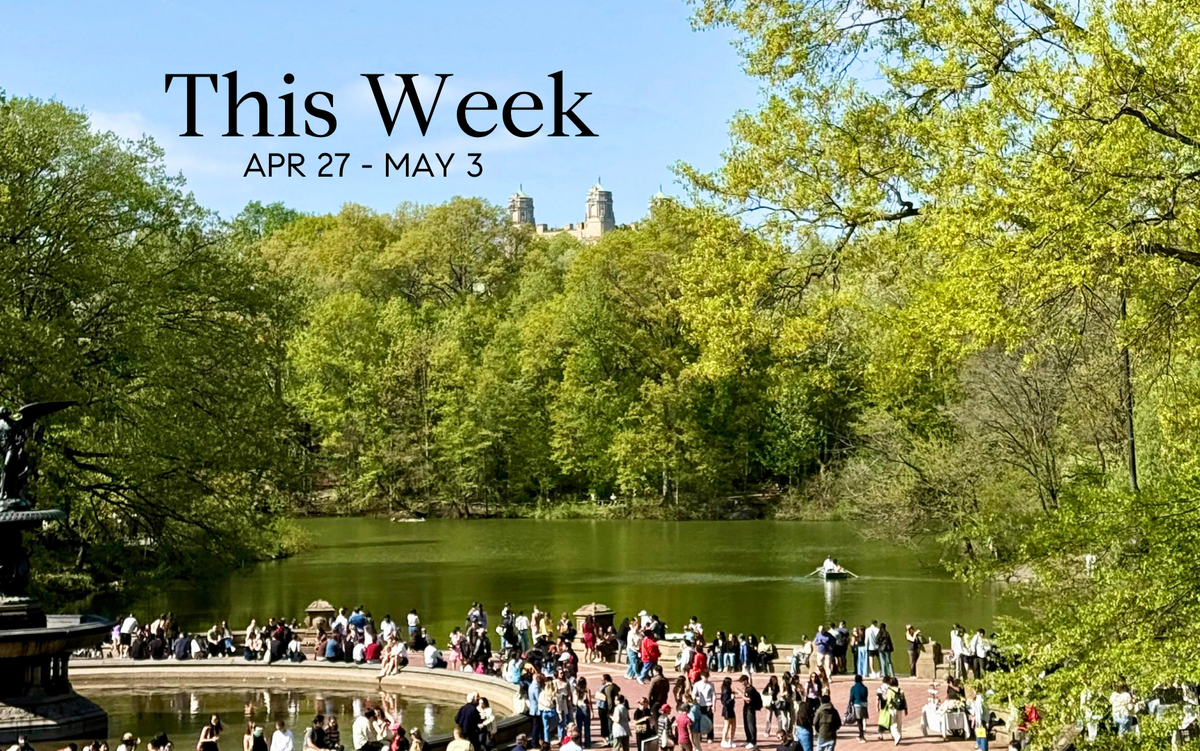
Yesterday in Central Park. One of those rare, perfect Saturdays when the city feels so incredibly alive — residents descending on the park, taking in its magnificence. Magnolias in full bloom, Bethesda Fountain running again, the Lake at its most serene, and the towers of the Beresford rising in the distance.
A few things I’ve been thinking about this week.
- The Upper West Side, Revisited — The Natural History Museum: From its 1877 origins to today
- Market Segmentation in Real Time — Sales across Manhattan and Brooklyn, By Price Point
- UWS Living At Its Best — Scale, light, and a distinct kind of Manhattan living
The American Museum of Natural History
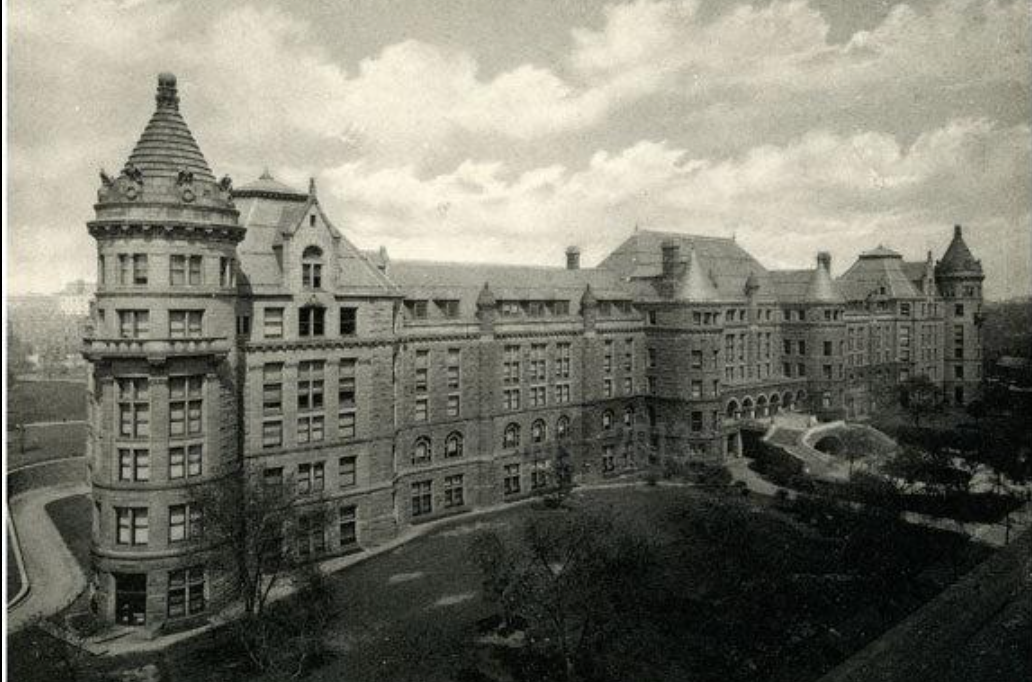
The original American Museum of Natural History in late-19th-century. The museum opened in 1877.
Long before the Upper West Side became what it is today, the stretch along Central Park West where the American Museum of Natural History now sits, was still on the edge of the city. In 1869, the museum was formally established, born out of a very 19th-century ambition: to create an institution that would bring science, exploration, and education to the public in a grand, civic way.
The first building opened in 1877, designed by Calvert Vaux and J. Wrey Mould who were central to the creation of Central Park itself. Vaux had shaped many of its most iconic elements, from Bethesda Terrace and its iconic Bethesda Fountain, to Belvedere Castle, and shaping how the park is still experienced today. His sensibility carried into what they built here: an intentionally monumental museum with a Romanesque structure of arches, towers, and heavy stone that felt almost like a cathedral to science. At the time, it stood relatively isolated, surrounded by open land, with the city still pushing north.
The museum kept evolving. As collections expanded and the city grew around it, new wings were added, one after another, stretching west toward Columbus Avenue. What we experience today is really an accumulation of eras with each addition reflecting a different moment in architectural thinking and in New York’s own development.
One of my personal favorites is the Rose Center for Earth and Space, a glass-and-steel structure designed by James Polshek, housing a newly reimagined planetarium. At its center is the Hayden Sphere, a massive globe that appears almost suspended within a glass cube—housing the planetarium, and a large scale model of the solar system. My kids grew up coming here, and it still evokes the most fond memories. The original Hayden Planetarium opened in 1935 and remained a defining part of the museum for decades. It was replaced in 2000 by the Hayden Sphere, marking a striking departure from the museum’s original architecture.
The latest chapter came in 2023 with the opening of the Richard Gilder Center, designed by Jeanne Gang. Where the original building is grounded and symmetrical, this new wing is fluid and almost geological in form, designed to evoke movement and curiosity.
This dialogue between the structures, from the 19th-century Romanesque towers to a 20th-century floating sphere to the 21st-century experimentation in organic form, is what makes the museum one of the most architecturally alive campuses in New York.
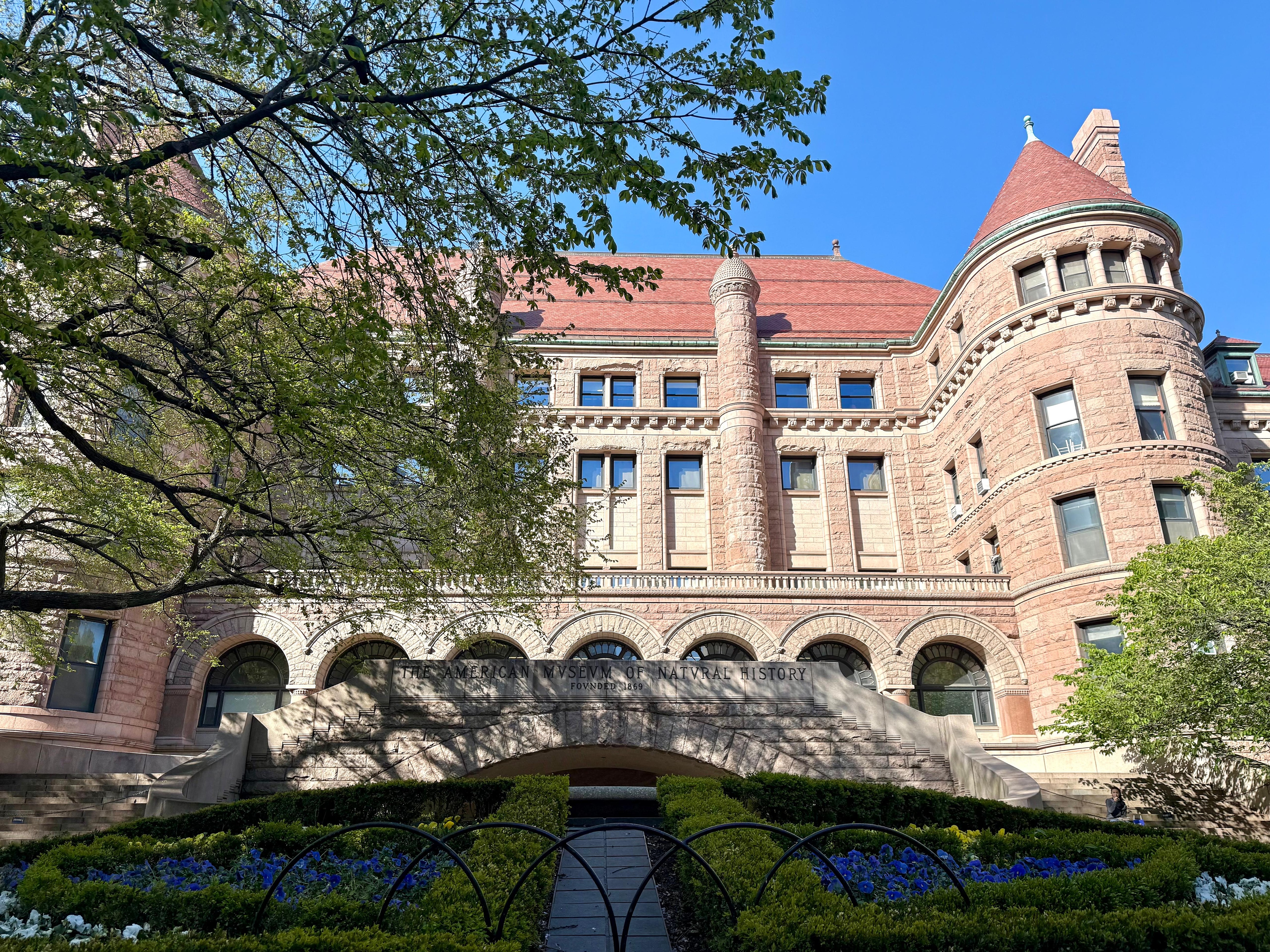
The American Museum of Natural History as it stands today. The West 77th Street entrance which is part of the original 1877 building, still anchors the museum, even as it has grown around it.
NYC Market Update
Against that broader backdrop, it’s worth looking at what we’re actually seeing on the ground here as we’re in the midst of an active spring market.
Manhattan Market
Looking at Quarterly Trend over the last 2 years: The longer view tells a consistent story. Manhattan contract activity has held within a recognizable range across every quarter since Q1 2024, with Intro-Luxe (under $1M) and Premier-Luxe ($1-3M) accounting for the overwhelming majority of volume in every period. The upper segments — High-end Luxury ($3-5M), Exclusive Luxury ($5-10M), and Ultimate Luxury ($10M+) — have remained steady contributors without being distorted by seasonal swings. There is no quarter where luxury fell off a cliff, and no quarter where it spiked beyond reason. That consistency is the market telling you that at the top of the Manhattan market, demand is durable.
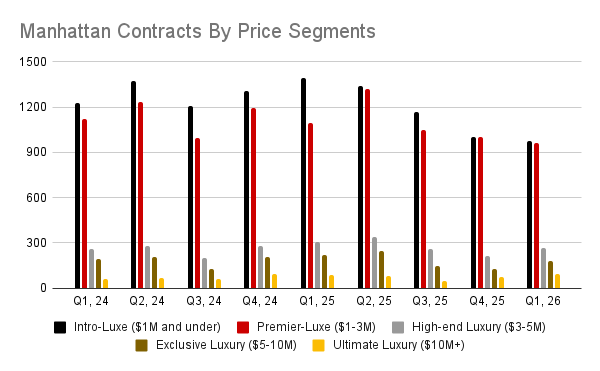
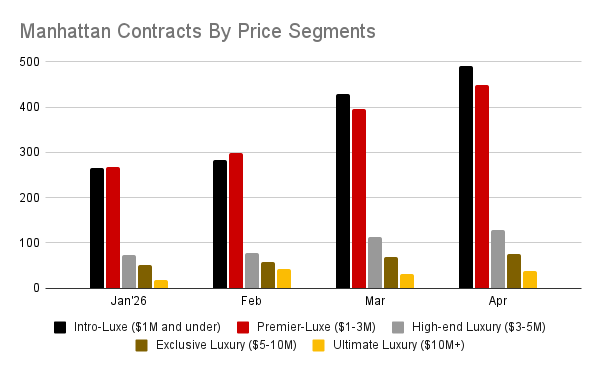
Month-by-month 2026: From January through April, contract totals climbed in every segment, with April posting the strongest numbers of the year so far (chart below). Every segment accelerating in the same month is not something you see every spring. Buyers who were waiting on the sidelines have stepped in.
Mar → Apr Contract Activity (by segment)
- Intro-Luxe ($1M & under): +14.7%
- Premier-Luxe ($1-$3M): +13.4%
- High-end Luxury ($3-$5M): +14.2%
- Exclusive Luxury ($5-$10M): +10.1%
- Ultimate Luxury ($10M+): +18.8%
Brooklyn Market
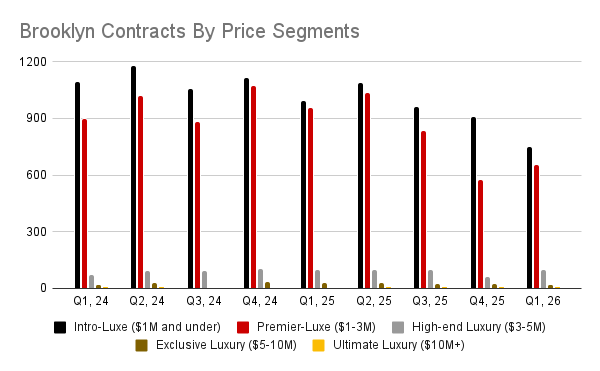
Brooklyn’s quarterly picture mirrors Manhattan’s in one key respect: the market has depth and it has shown up consistently. Intro-Luxe and Premier-Luxe dominate volume, but Brooklyn has been building a track record at the higher price points. The High-end segment has increased noticeably over this period, reflecting a buyer pool that has moved past the borough’s long-held ceiling.
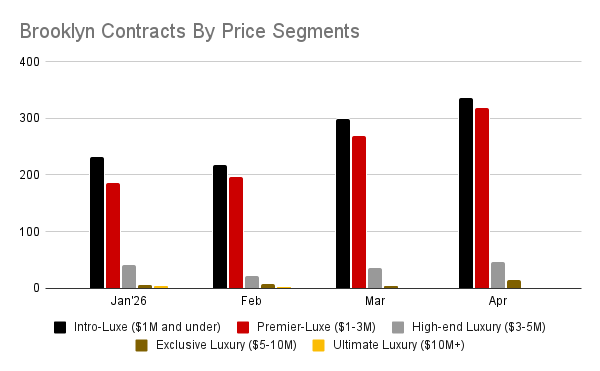
Month-by-month 2026: April’s Brooklyn numbers deserve attention. The Exclusive Luxury segment ($5-10M) went from 4 contracts in March to 14 in April, a 250% increase from a small base, but a number that signals real activity, not a rounding error. The more foundational segments moved sharply as well (chart below). Brooklyn’s spring market has arrived with a bang in all price segments but especially at the very high end.
Mar → Apr Contract Activity (by segment):
- Intro-Luxe ($1M & under): +12.4%
- Premier-Luxe ($1-$3M): +18.6%
- High-end Luxury ($3-$5M): +31.4%
- Exclusive Luxury ($5-$10M): 4 to 14 at +250%
- Ultimate Luxury ($10M+): 0 → 1
Living on the Upper West Side
Looking beyond numbers, what today’s demand looks like in practice becomes clear when you look at the homes themselves. This week, I’m focusing on the Upper West Side, where we’ve just launched and re-launched a number of unique listings.
What continues to draw people to the Upper West Side is the layering of history, architecture, and a way of living that feels distinct from the rest of Manhattan. There’s a concentration of cultural institutions, with Central Park and Riverside Park bookending the neighborhood—and, further north, Morningside Park adding another dimension. And it shows up clearly in the homes themselves.