
This Is Why We Live in New York
The new pied-à-terre tax, the High Line as cultural spine, and what the May market is really telling us about Manhattan luxury.
Contents
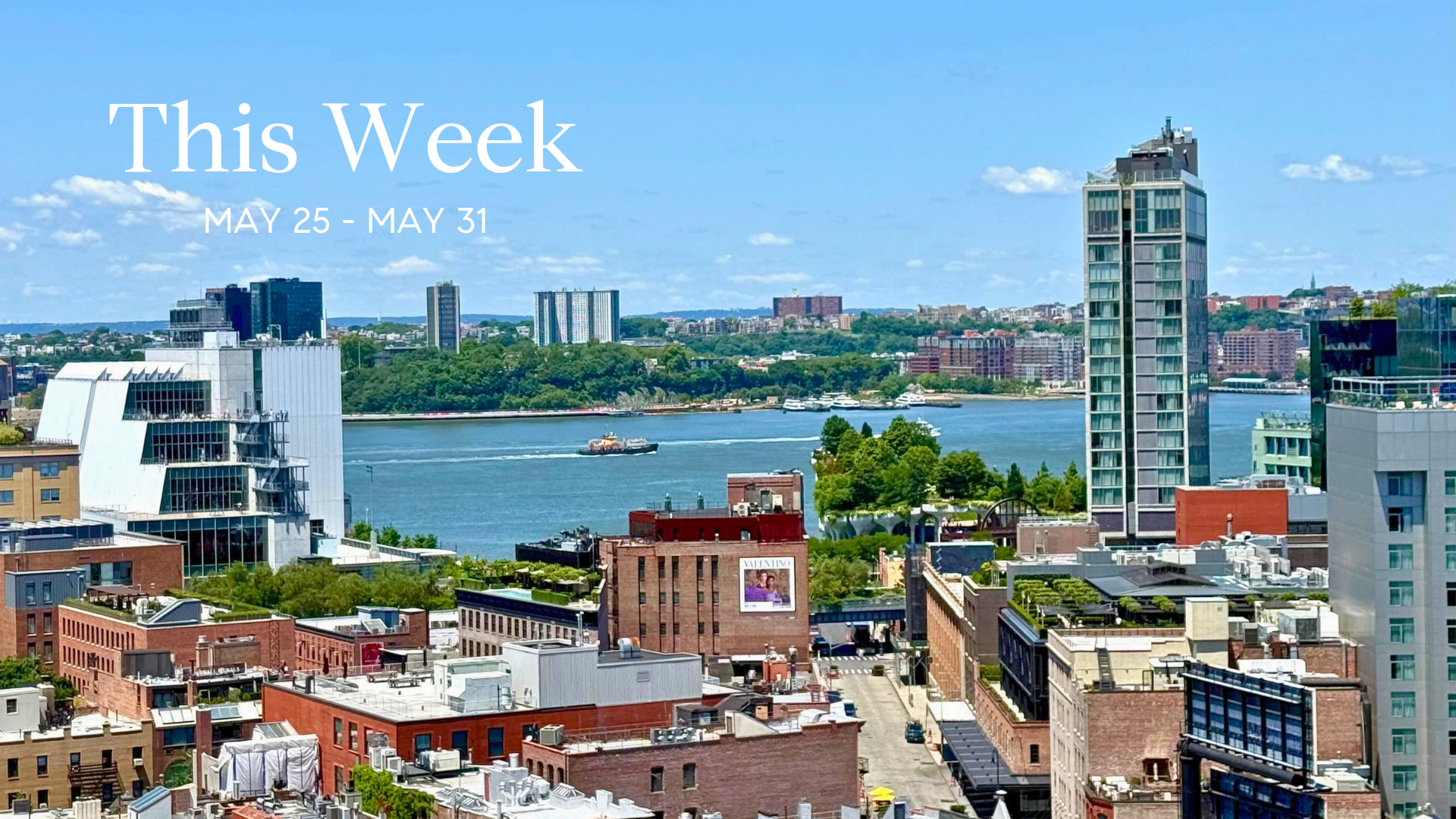
I took this yesterday from a rooftop on the border of the West Village and the Meatpacking District. The Hudson in the distance, the Whitney rising up on the left, the Standard Hotel on the right, Little Island stretching out into the Hudson — and if you look closely, the High Line threading through it all just above street level.
A few things I’ve been thinking about this week.
- The Pied-à-Terre Tax Arrives — What it says, what it means, and what to watch
- The High Line Effect — From rail line to cultural spine
- The May Numbers Are In — Demand Holds Steady and Ultra-luxury is still thriving
The Pied-à-Terre Tax Arrives
The New York State Legislature approved a new pied-à-terre tax this week. Beginning July 1, certain New York City residential properties valued at approximately $5 million or more that are not used as a primary residence will be subject to an annual surcharge.
At first glance, the tax rates themselves appear relatively modest.
While much of the attention has focused on the tax rates themselves, the more significant long-term story may be how these properties are valued. Today, many high-end co-ops and condominiums carry Department of Finance valuations that are dramatically below what those properties would sell for in the open market. Looking at several examples, the gap can be substantial.
Over time, the city plans to shift toward a methodology intended to better reflect market values.
One important exception involves primary residency. A property may be exempt if it serves as the primary residence of the owner, a qualifying family member, or a tenant under a bona fide lease. As implementation begins, exactly how primary residence status is determined and documented will be something many owners will be watching closely.
The law affects a relatively small portion of the housing market, but it raises broader questions about how taxation influences buyer behavior at the high end of the market.
Will it materially affect demand? Probably not for most ultra-high-net-worth buyers. Manhattan’s luxury market has historically proven remarkably resilient. But for some discretionary second-home purchasers, it may become one more factor in an already complex decision-making process.
It’s a development worth watching as implementation begins this summer and the market starts to react.
The High Line Effect: From Rail Line to Cultural Spine
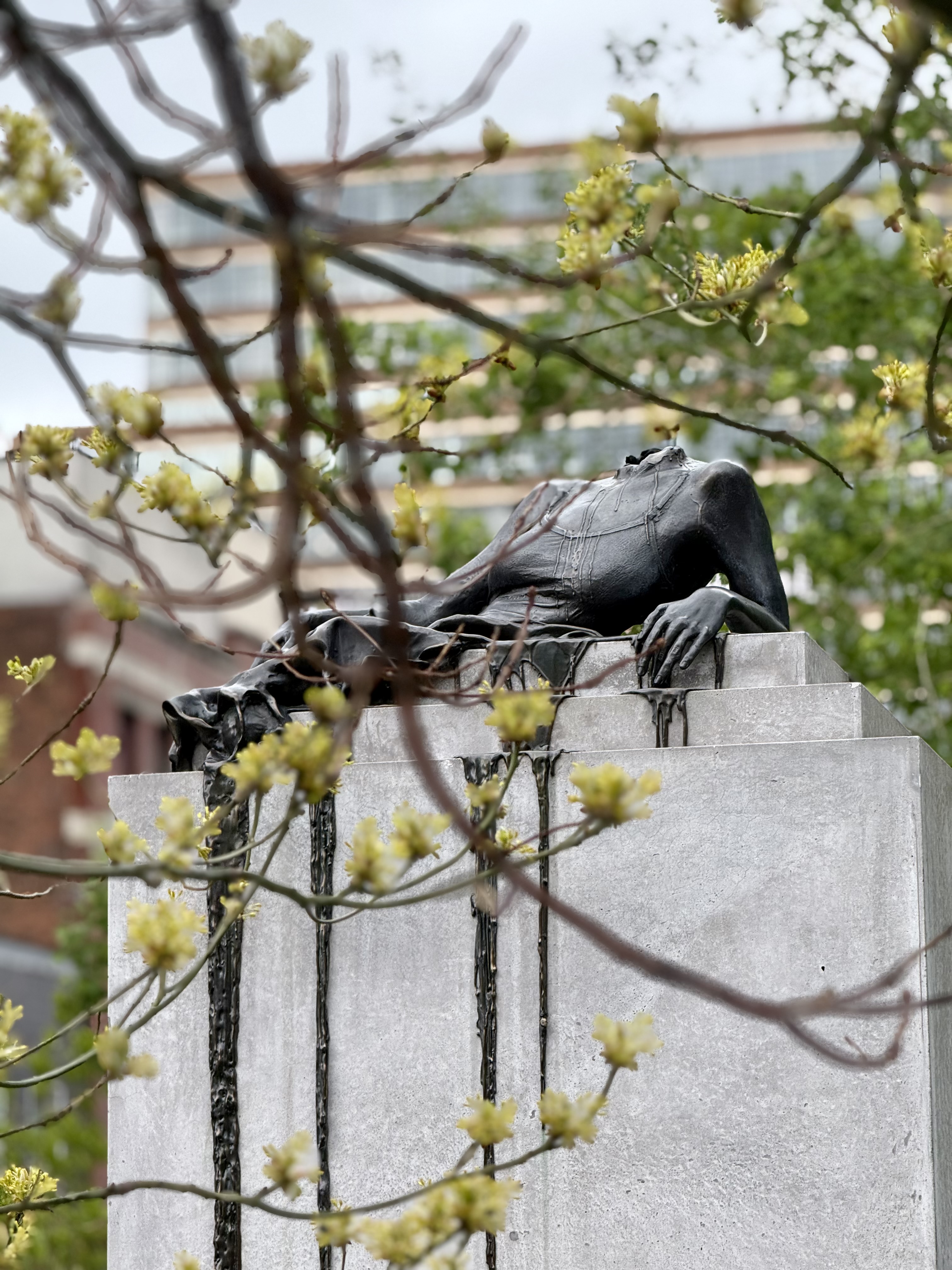
On the High Line, opposite Zaha Hadid’s building, a sculpture that feels almost in motion, softening, slipping, melting. Diana Al-Hadid’s “In Mortal Repose” (2011), Kasmin Gallery. A headless torso dissolving into its own pedestal, bronze dripping downward.
I stopped here longer than I expected. It was one of those moments where everything in the city just clicks.
A few weeks ago, we made our way down the west side of Manhattan with a group of friends, along the Hudson, onto the High Line, and all the way down to the Whitney. It was one of those clear, crisp spring days when the city feels especially alive.
The beauty and vibrancy of this city we call home felt especially compelling. One of those quiet “this is why we live here” moments.
I found myself recounting the history of the High Line, pointing out the various starchitect buildings along the way and sharing whatever details I could remember about how it all came together. It reminded me how much I’ve always loved this particular New York story.
There was a time when this stretch of the West Side was defined by what ran through it: an elevated freight rail line carrying meat, dairy, and goods directly into warehouses. When the trains stopped running in the 1980s, what remained was a rusting structure, slated for demolition.
The Friends of the High Line was formed, led by a small group who believed the structure was worth saving. With persistence — and eventually real backing from both the city and private donors — it was preserved and reimagined.
What could have been torn down became a linear park, layered with planting, art, and views that shift with every block.
Architecture followed, and in many ways accelerated what the High Line had already set in motion.
Walking it today, you move through a corridor shaped by some of the most recognized names in architecture — Zaha Hadid, Frank Gehry, Jean Nouvel, Shigeru Ban and many more — buildings that either sit directly on the park or are framed by it. It’s rare in New York to see that level of architectural concentration unfold along a single path.
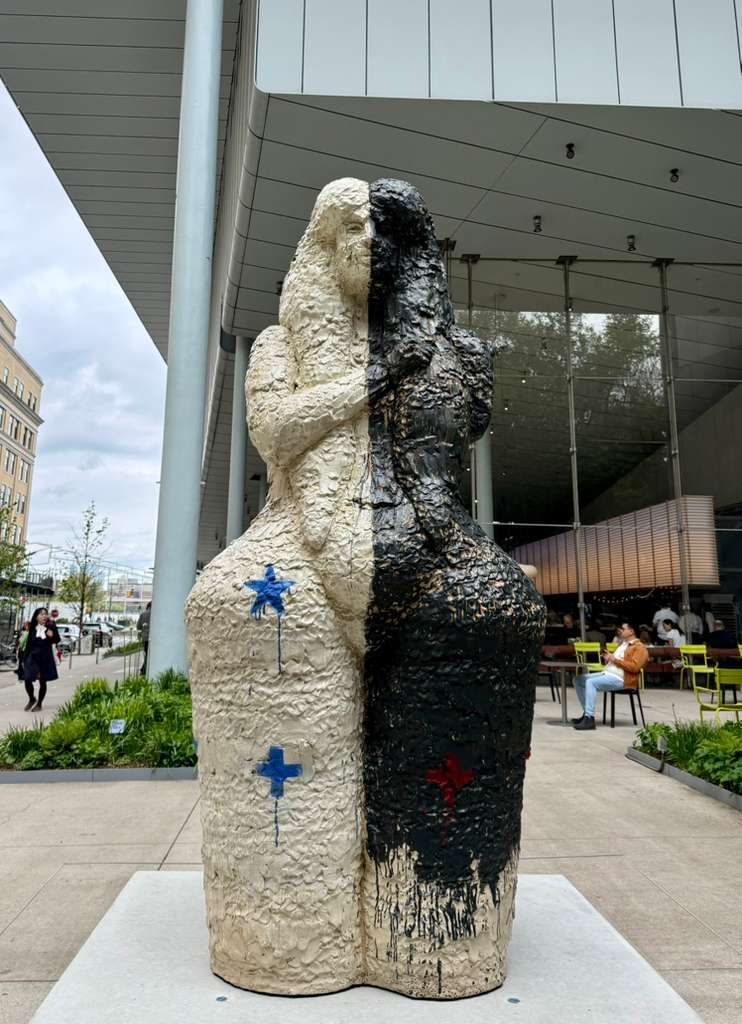
Raven Halfmoon, “Too Ancient to Care” (2025–26). Ceramic, nine feet tall. Whitney Museum plaza, as part of the 2026 Whitney Biennial. Hard to walk past without stopping.
At its southern edge, the Whitney Museum of American Art anchors the experience. When it moved downtown from the Upper East Side, it helped define this part of Manhattan as a cultural destination. Its terraces open toward the Hudson and the High Line, making the connection feel seamless.
Just beyond, Little Island — designed by Thomas Heatherwick and funded by Barry Diller and Diane von Furstenberg — floats out into the Hudson on 132 concrete tulip-shaped columns. Another unlikely idea that became essential.
Few investments in public space have done more to reshape a neighborhood, or its values.
What makes the High Line work isn’t just design. It’s the alignment of ideas where public space, architecture, culture, and investment are executed masterfully.
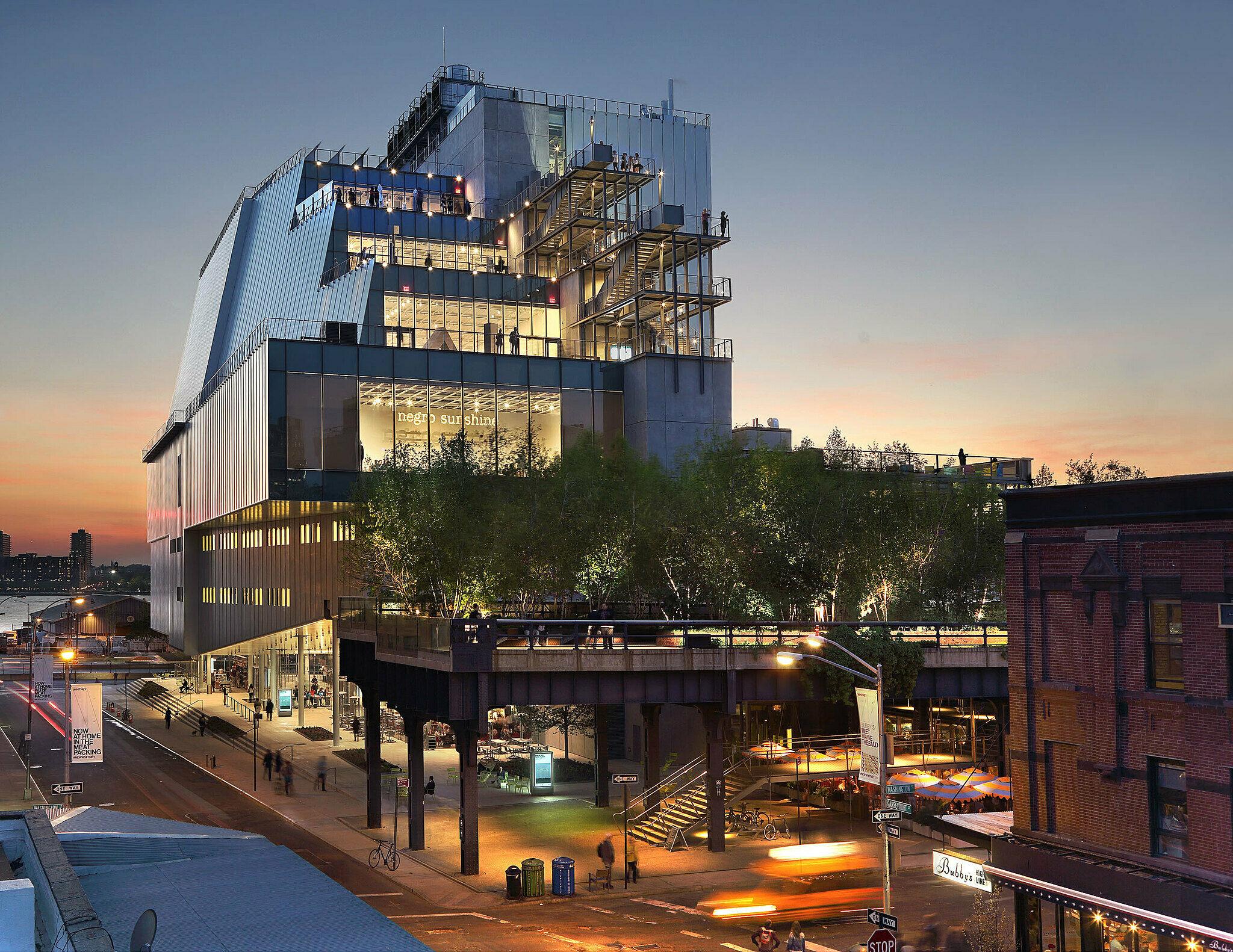
The Whitney Museum of American Art with the HighLine in the foreground.
Manhattan Market Insights
If you’re trying to read this market, the signal is clearer than many of the headlines suggest.
The market is not moving uniformly. Buyers are more selective than they were several years ago, but when pricing, quality, and location align, transactions continue to occur at a steady pace.
Inventory
Inventory has continued to rise this year, but not to levels that fundamentally alter the supply-demand balance. Manhattan remains well below the inventory levels seen before the pandemic.
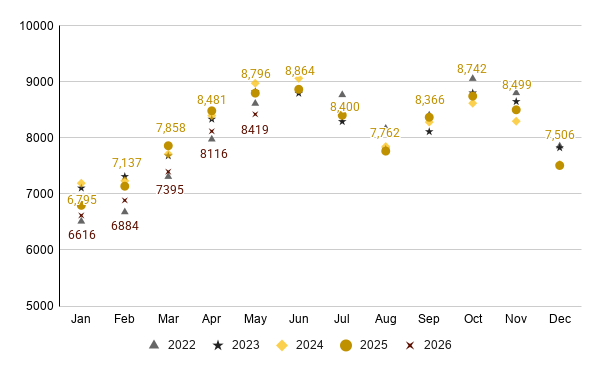
Overall Demand: Manhattan Contracts Signed
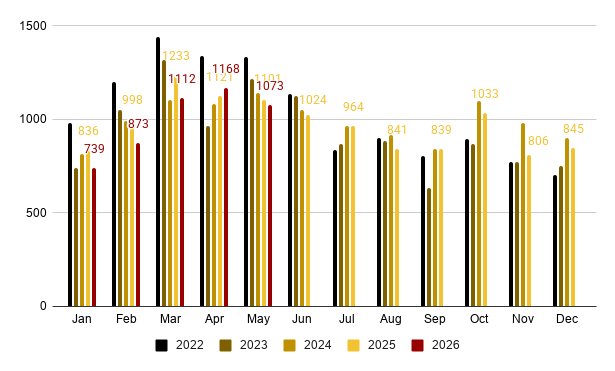
What stands out more is demand. Despite higher interest rates and ongoing economic uncertainty, contract activity has remained healthy, particularly at the upper end of the market.
Luxury ($4M+): Contracts Signed
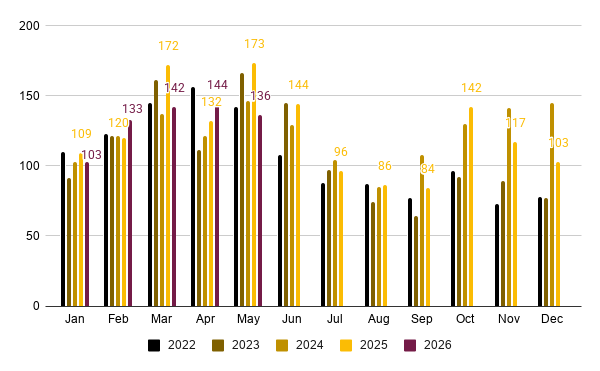
The luxury market continues to outperform. Through May, contract activity above $4 million has remained remarkably consistent, with each month significantly exceeding 100 signed contracts and most exceeding 130.
Despite elevated interest rates and ongoing economic uncertainty, affluent buyers remain active. Well-priced, high-quality properties continue to find an audience, particularly in neighborhoods where inventory remains limited.
Luxury ($10M+): Contracts Signed
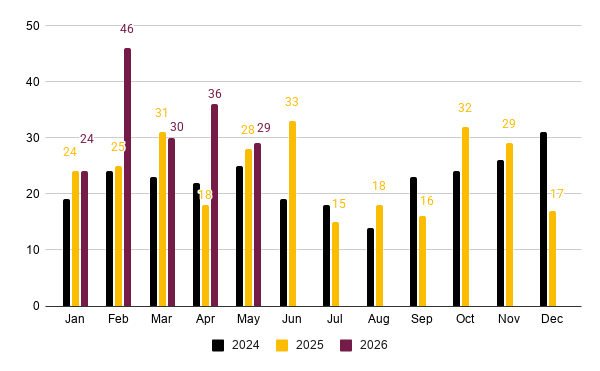
At the very top of the market, demand remains surprisingly robust. Through May, the $10 million-plus segment has consistently outperformed historical norms, including an exceptional 46 contracts signed in February.
The ultra-luxury market often responds to different forces than the broader housing market. Wealth creation, liquidity events, and global capital flows tend to matter more than mortgage rates. As a result, demand for exceptional properties remains healthy despite broader economic and geopolitical uncertainty.